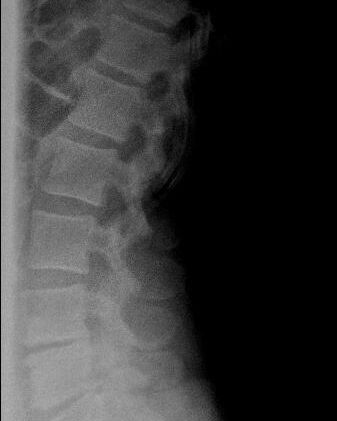
A 65-year-old man came to us after living with back pain for the better part of three years. It did not arrive overnight. It crept in slowly, the way these problems usually do, starting as a dull ache low in the back and growing into something that shaped his whole day. The pain sat in the lumbar region, just above the belt line, and over time it began to travel. It ran down into both legs, not constantly, but in waves that came and went.
What finally brought him in was not the pain at rest. It was what happened when he walked. He could set off fine, then after a few minutes his legs would grow heavy, tired, almost rubbery, and he would have to stop. Sitting down for a moment, or leaning forward over something, gave him relief, and then he could carry on for another short stretch before the same thing happened again. He put it in the plainest possible terms: he could no longer walk his dog without stopping to rest.
That pattern has a name. Doctors call it neurogenic claudication, and it is one of the most recognisable signs that something in the lower spine is crowding the nerves.
If you have been quietly searching your own symptoms, this is the cluster worth paying attention to.
The hallmark symptoms of this kind of lumbar spine problem tend to include:
- Lower back pain that builds over months or years rather than appearing suddenly
- Pain, heaviness or cramping in one or both legs, often described as the legs feeling weak or about to give out
- Symptoms that get worse with walking or standing and ease when you sit down or lean forward
- A shrinking walking distance, where you manage less and less before you have to stop and rest
- Tingling, numbness or a pins-and-needles feeling running down the legs
- Relief from bending forward, such as leaning on a shopping trolley, a sign so common it has earned its own nickname
Not everyone with back pain has this. But when leg symptoms appear alongside the back pain, and especially when walking is the thing that triggers them, the problem usually points toward the nerves rather than the muscles. That single distinction changes almost everything about what should come next.
What the scan showed
His MRI was clear and, in a way, almost too convincing. It showed a degenerative spondylolisthesis at the L4/5 level. In plain language, one vertebra had slipped forward over the one beneath it, measured as a moderate, grade II slip. Reassuringly, the disc between the two still looked healthy, with its signal preserved. So here was a man whose symptoms and whose imaging lined up neatly. The scan showed instability, and instability is the kind of word that points a patient straight toward an operating room.
The first recommendation
The first assessment came from spine surgery, and it followed the logic of the image. The instability was real and visible, so the proposed treatment was a semi-rigid dorsal fusion: an operation to lock the slipping segment in place with hardware so that it could no longer move.
When the picture shows instability, fusing the unstable segment is a reasonable, well-established answer. This recommendation was not careless. It was the textbook response to what the scan revealed.
That is exactly why the case is worth telling. The advice was defensible. It was not a mistake sitting there waiting to be caught.
The second opinion
Before agreeing to surgery, he did one thing that changed his entire course. He asked for a second opinion.
A neurosurgeon reviewed the same MRI, the same slip, the same grade II measurement, and reached a markedly different conclusion. In their reading there was no urgent reason to operate. The instability on the film did not, on its own, justify putting hardware into his back, at least not yet, and certainly not before trying something less drastic.
The alternative was almost disappointingly ordinary:
- A structured, supervised weight-loss programme
- Targeted physiotherapy to strengthen the muscles supporting the spine
- Time, with a clear plan to reassess rather than rush
He committed to it properly, and that is the part that is easy to underestimate. Over the following months he lost 25 kilograms. As the weight came off and the supporting muscles grew stronger, his symptoms faded. Today he is completely free of pain. He walks his dog without stopping. There is no implant in his spine, and he never set foot in an operating room.
Why this case matters
Here is the lesson, and it is more subtle than "surgery is bad."
A structural finding does not automatically require a structural fix. A scan shows what a body looks like. It does not always show what a body needs.
Both doctors were competent and both read the images correctly. They did not disagree about the facts. They disagreed about what to do with those facts, and that gap is precisely where the second opinion did its work. It did not catch an error. It opened up a path that the first recommendation, taken alone, had quietly closed.
There is also a quieter point hiding here, one about the body as a whole rather than the spine as a single part. The slip on the scan never changed. What changed was the load resting on it. Twenty-five kilograms is an enormous amount of force to take off a lumbar spine with every step a person takes, and his body responded to that relief far better than anyone could have promised in advance.
A word of balance
None of this is an argument against surgery, and it would be dangerous to read it that way. There are spines that genuinely need stabilising, and there are situations where waiting causes lasting nerve damage. For some patients the first recommendation is exactly right, and delay is the real risk. The point here is narrower and more useful: when the decision is large and hard to reverse, you deserve more than one informed view before you choose.
A second opinion is especially worth seeking when:
- The proposed treatment is major, permanent or difficult to undo, such as a spinal fusion or any implant
- You are being offered surgery for a problem that has not yet had a fair trial of conservative treatment
- Your symptoms and your scan do not fully match, or the explanation simply does not sit right with you
- You want to understand the full range of your options before you commit to one of them
Asking for a second opinion is not a sign of distrust in your doctor. It is a normal and sensible part of taking a serious decision seriously.
Which leaves the question this case really turns on, and it is one worth carrying into your own care: when does a finding on a scan truly require an intervention, and who gets to make that call? In the end it should be you, sitting calmly between more than one informed opinion, choosing your path with your eyes open.