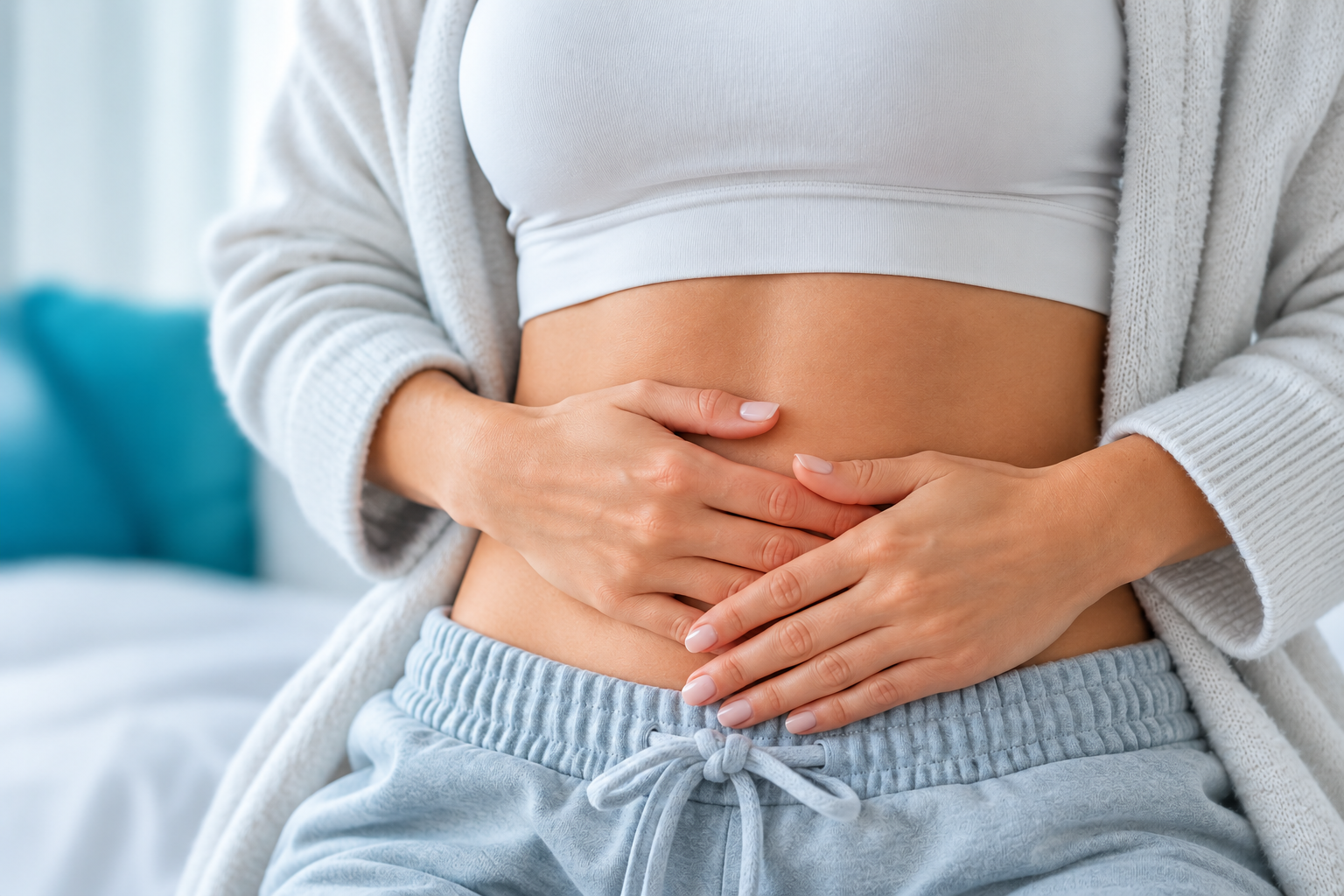
What feeds, filters and likes do to your sleep, mood and body image, six questions to check your use, and the phone settings that help.
Social media and your health: a small guide to living with the feed
11 Nov 2026 · @Pedro Stark
There is a moment, and every woman who owns a telephone knows it, when she picks the thing up to check the time and puts it down forty minutes later without having seen the time at all. Nobody forced her, that much is true, but neither was it entirely her own decision, because on the other side of that small window of glass sit many clever and well-paid people whose work is to make putting it down a little harder than picking it up. This is not a conspiracy, it is a business model, and a business model, unlike a conspiracy, can be read, understood and, with a little patience, outwitted.
What follows is not a sermon against the telephone. The world has sermons enough, and the telephone has its virtues, it gathered together women with endometriosis whom medicine had sent home with a painkiller and a shrug, it carries the voices of daughters who live in other countries. This is a small guide, written for you and not for the platforms, on what the feed does while you scroll, how to tell whether it is doing it to you, and which few minutes spent in your settings will give you back a part of your evenings, of your sleep and, perhaps, of your peace with the mirror.
Tonight, in ten minutes
If you read nothing else, read this, and do it before you go to bed, because good intentions, as everyone knows, are the furniture we always mean to move tomorrow.
- Turn off every notification except messages from the people you love.
- Set sleep hours from ten at night to seven in the morning, on the phone and inside Instagram or TikTok.
- Charge the phone outside the bedroom, and let a cheap alarm clock do the one job the phone was never meant to do.
- Turn the screen grey for a week.
- Unfollow three accounts that leave you smaller than they found you.
The exact menus are in the table further down. And if you are not well tonight, leave all of this for another day and go straight to the helplines at the end.
What social media does to your health while you scroll
Four design choices do most of the work. None of them was made with your health in mind, and knowing them is already half of the defence.
It learns what holds you, not what helps you
The feed does not ask whether a video is good for you, it only notices that you stopped to watch it, and it brings you more of the same. When researchers opened new TikTok accounts set to age 13 in 2022, the app showed eating disorder content within 8 minutes. In 2025, an account posing as a 15-year-old girl engaged with a few posts about depression and self-harm, and soon 97% of Instagram Reels and 96% of TikTok videos it was offered were harmful. The feed is not cruel, it is obedient, and it obeys your weakest minute.
Filters change the face you compare yourself with
By age 13, 80% of girls had used a filter or a retouching app. Adults are not spared: in a 2025 experiment with mostly adult women, a slimming filter on their own selfie widened the gap between the body they had and the body they wanted. The mirror in the bathroom has not changed, it is the other mirror, the one in your hand, that learned to lie a little every day.
Likes turn approval into a score
In the brains of teenagers who saw their photos with many likes, a reward centre lit up more strongly, and few likes made them feel rejected. Comparison and the hunt for approval predicted depressive symptoms, more so in girls. A number under a photograph says nothing about the person in it, though it is very persuasive at eleven at night.
The scroll has no bottom
A book ends, a film ends, even a bad dinner ends. The feed does not. Among 10,904 British 14-year-olds, girls who spent five hours or more a day on social media had depressive symptom scores 50% higher than girls who spent one to three, and poor sleep carried much of that link. Across 212,613 adolescents in 40 countries, problematic use raised the odds of trouble falling asleep, more for girls than for boys.
What science knows, and what it does not
It would be dishonest to stop there. Most of this evidence shows links, not causes, and serious researchers find effects that are small or mixed for most people. The research on adult women is thin. But you do not need scientists to agree before you protect your own sleep, in the same way that nobody waited for a trial to decide that it is wise to close the window when it rains.
Is social media affecting you? Six questions to ask yourself
The hardest thing to see is the thing we look at all day, so it helps to ask the questions out loud, as a doctor would, and to answer them honestly, since nobody is listening. These follow the six signs researchers use to spot problematic use (Andreassen et al., 2016).
- Is the phone the first thing you touch in the morning and the last at night, without ever having decided so?
- Do you stay longer than you meant to, and more often than a year ago?
- Do you open it to escape a feeling, and close it feeling worse?
- Do you feel restless or irritable when you cannot check it?
- Have you tried to cut down and found yourself, a few days later, exactly where you started?
- Has it cost you sleep, work, or time with the people in the room?
This is not a diagnosis, and a yes or two is the common condition of our time. If three or more are yes, try the three-week plan further down. If question 3 brought a heavy yes, and the feeling you keep escaping is a low mood, read the section on when to get help today, not tomorrow.
Then, for three days, give your mood a number from 0 to 10 before you open the app and again ten minutes later, and write both down. A number is a humble thing, but three days of them draw a line, and that line is the only study ever done about you.
How to use social media less: the settings that help
The platforms chose the defaults, and a default is only a decision that someone else took on your behalf and hoped you would never revisit. Revisit it. The rows marked First are the ten minutes of tonight; the others can wait for a quiet Sunday.
When | What to change | Where to find it |
|---|---|---|
First | Silence all notifications except people you love | iPhone: Settings > Notifications, then each app. Android: Settings > Notifications > App notifications |
First | Sleep hours, 22:00 to 07:00 | iPhone: Settings > Screen Time > Downtime (on iOS 27: Screen Time Schedule). Android: Settings > Digital Wellbeing > Bedtime mode. Instagram: Profile > menu > Settings and activity > Time management > Sleep mode. TikTok: Settings > Time and well-being |
First | Grey screen for a week | iPhone: Settings > Accessibility > Display & Text Size > Color Filters > Grayscale. Android: the grayscale option inside Bedtime mode |
Then | A daily limit | Instagram: search the settings for Daily limit. TikTok: Settings > Time and well-being. iPhone: Screen Time > App Limits (on iOS 27: Time Allowances). Android: Digital Wellbeing > App timers |
Then | Only people you follow, newest first | Instagram: on Home, tap the Instagram logo > Following. It goes back to the usual feed when you reopen the app, so choose it again each time. TikTok: tap Following at the top of the feed |
Then | Fewer harmful suggestions | Instagram: Profile > menu > Suggested content > Sensitive content > Less; search the settings for Reset suggested content; on any post, three dots > Not interested. TikTok: in Settings, Refresh your For You feed, Manage topics and keyword filters, for words such as "what I eat in a day", "body check" or "weight loss" |
Then | Hide like counts | Instagram: search the settings for like counts |
Then | Make the app harder to reach | Move it off the home screen into a folder, and log out after each use. A few seconds of effort are often enough to interrupt a habit that lives on none |
Apps move their menus more often than people move house, so if a path above has changed, search the settings for the name in bold. Paths checked against the official help pages that were available in November 2026.
Does cutting down on social media help? What studies show
It is a modest comfort, but a real one, that the changes which help are small, cost nothing and can be undone the next morning if they do not suit you. Researchers have tested a few of them.
What people did | What changed | Study |
|---|---|---|
About 30 minutes a day of social media, for 3 weeks | Less loneliness and fewer depressive symptoms, most in those who felt worst at the start | Hunt et al., 2018, 143 students |
Social media cut to 60 minutes a day, for 3 weeks | Use fell by about half, and feelings about appearance and weight improved | Thai et al., 2023, 220 young people aged 17 to 25 with raised anxiety or depression, most of them women |
Phone screen switched to grayscale | 20 to 39 fewer minutes a day on the phone | |
No phone in the 30 minutes before bed, for 4 weeks | Fell asleep about 12 minutes faster and slept about 18 minutes longer | He et al., 2020, 38 adults with poor sleep |
These are small studies, mostly of students, and none of them is the last word. But they point the same way, and together they make a plan you can run on yourself:
- Week 0. Write down your daily screen time, which the phone already counts for you, and each evening your mood from 0 to 10.
- Weeks 1 to 3. Social media for 30 to 60 minutes a day, no phone in the last half hour before bed, and the phone out of the bedroom. If you break the rule on day four, as most of us will, do not start again from zero, simply carry on the next morning, because a habit is undone by returning, not by never falling.
- Day 21. Compare the numbers and keep what helped. If nothing moved, you have lost nothing. If something moved, you will know it before any scientist does.
How to tell if health advice on Instagram or TikTok is reliable
The feed ranks health advice the way it ranks everything else, by how long it holds you, and certainty, fear and a product to sell hold people very well. Accuracy is not on the list.
- The pill. Of 307 TikTok videos on the contraceptive pill, 54% were negative and only 27% came from health professionals. The negative ones collected more than twice the likes.
- Tests. Of 982 influencer posts on medical tests, such as fertility (AMH) tests and full-body scans, 87% mentioned benefits and 15% mentioned harms. In 68% the person posting earned money from it.
- Polycystic ovary syndrome (PCOS). Videos made by doctors scored 3.6 out of 5 for quality. Videos by everyone else scored 1.0.
- Menopause. Of the top 1,000 Instagram posts on menopause, 66% promoted a branded supplement.
Before you believe a health post, put five questions to it, the way you would look at a melon in the market before taking it home.
- Who is speaking? A named doctor, nurse or pharmacist whose registration you can check, or someone who simply speaks well?
- Is something for sale? A discount code, a link, a programme, "my" supplement. Selling is not a crime, but it is a reason to ask twice.
- Does it promise certainty? Medicine rarely says always or never. A post that does is usually selling the certainty itself.
- Does it mention harms? Honest advice speaks of benefits and risks in the same breath.
- Does it tell you to stop a treatment? Never stop a prescribed medicine because of a video. Talk to the doctor who prescribed it first.
To check a doctor's registration, use the Ordem dos Médicos search in Portugal or the Ärztekammer search for your statein Germany. In Sweden, Socialstyrelsen answers on 075-247 42 42, Tuesday to Friday, 9 to 10.
Then check it against a source that earns nothing from your attention: SNS 24 in Portugal, gesund.bund.de in Germany, 1177 in Sweden.
None of this means that other women's stories are worthless. For conditions that medicine dismissed for decades, such as endometriosis, patients made 83% of the top 100 TikTok videos, and many found there the first words for what they felt. Take the company and the courage from those stories, and take the diagnosis and the treatment from someone who can examine you.
Social media and teenage girls: advice for parents
The years between 11 and 13 are when heavier use predicts lower life satisfaction a year later for girls, earlier than for boys. Bans that come too late and lectures that come too long have the same result, so here are a few things that work better than both.
- Wait, and do not apologise for it. The European Commission has proposed no social media before 13 and no own account before 15, and a Swedish government inquiry proposed a similar line in June 2026. The law is slowly walking where you are allowed to run.
- The phone sleeps in the kitchen. Every phone in the house, yours included, charges outside the bedrooms at night. The UK's chief medical officers advise exactly this, and it is easier to keep when it is a house rule and not a punishment.
- Set up her account with her. Instagram teen accounts are private by default and go quiet from 10 pm to 7 am. Check that these are on, hide like counts and set a daily limit, using the table above. Do it side by side, so that she knows where the settings are when you are not there. If you want more, link her account to yours through Instagram's Family Center or TikTok's Family Pairing, which show time spent and let you set limits without opening her messages.
- Play spot the filter. Look at a few photos together and guess what was changed. Girls in one study noticed the filters but missed the body reshaping, and a trick that has been seen once loses half its power.
- Ask about the feed, not only the hours. Ask the way you would ask about a school friend: who on there made you feel good today, and who made you feel bad? What does it show you this week? If the answer is diets, sadness or bodies, sit together, mark those posts as not interesting and reset the suggestions. If she mentions self-harm or not eating, speak to her doctor this week, and if she is in danger now, call the numbers below.
- Be the example you would like to have had. Children have never been good at doing what we say, and they have never failed to copy what we do.
When to get help, and who to call
There is a kind of tiredness that a weekend without the phone will cure, and another kind that it will not, and it is no shame to need help telling them apart. Talk to your family doctor if, for several weeks:
- you sleep badly most nights;
- your mood is low, or nothing interests you, for two weeks or more;
- food has become a set of strict rules, you skip meals, or you make up for eating;
- you avoid mirrors, photos or people because of how you look;
- in a child: she withdraws, stops seeing friends, or hides what she does online.
If you think about hurting yourself, or that life is not worth living, do not wait for an appointment. Call one of these numbers today.
Country | Health advice | Someone to talk to | Eating disorders | Emergency |
|---|---|---|---|---|
Portugal | SNS 24: 808 24 24 24, psychological counselling 24 hours, also in English | 1411, suicide prevention and psychological support, 24 hours, free; SOS Voz Amiga: 213 544 545, daily 15:30 to 00:30; SOS Criança e Jovem: 116 111 for children and teens, 24 hours | Through SNS 24 or your family doctor | 112 |
Germany | 116 117, out-of-hours doctor | TelefonSeelsorge: 0800 111 0 111, 0800 111 0 222 or 116 123, day and night, free; Nummer gegen Kummer: 116 111 for children and teens, 0800 111 0 550 for parents | BIÖG line: 0221 892031 | 112 |
Sweden | 1177, day and night | Mind Självmordslinjen: 90101, 24 hours; BRIS: 116 111 for under-18s; Mind Föräldralinjen: 020-85 20 00 for parents | Frisk & Fri: 020-20 80 18 | 112 |
Numbers checked in November 2026.
A last word
The feed will not change because we ask it nicely, although the law, slowly and with its usual dignity, has begun to ask it less nicely. In the meantime the telephone remains what it always was, a tool, and a tool is good or bad according to the hand that holds it and the hours it is allowed to keep. Hold it a little more loosely. Give the night back to sleep, the morning back to yourself, and the mirror back to the woman who actually lives in it.
About the author

Mia Espanola
Senior partner